
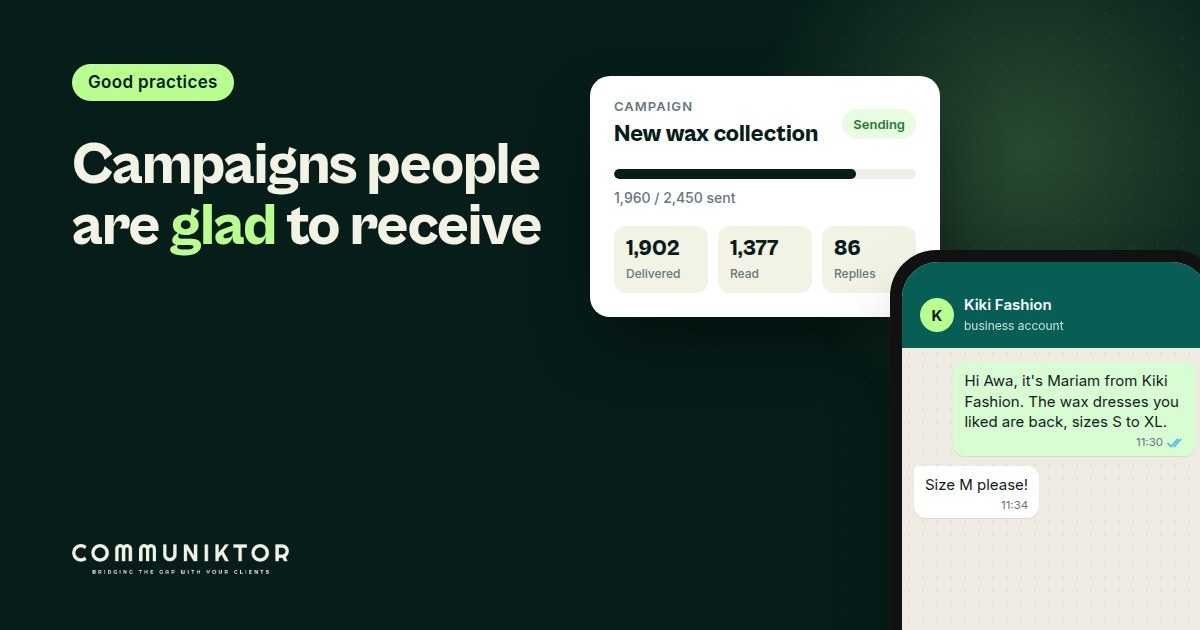
A WhatsApp campaign lands in the same place as messages from family and friends. That is exactly why it works so well, and why it has to earn its place. The campaigns that get replies are the ones people would have been sorry to miss: a restock of the dress they asked about, a discount on the shop they buy from every month, a reminder that registration closes on Friday.
Here is how to plan and send campaigns like that from the Communiktor dashboard, on the Pro plan.
Start with the right people
Everything else depends on this. Send campaigns to people who know you and agreed to hear from you: customers who bought from you, people who asked a question on WhatsApp, visitors who left their number to get your offers.
Then narrow it down. A campaign for a new range of school bags is great news for parents and noise for everyone else. Your contact groups are there for this: one group per type of customer, area or interest, and each campaign goes to the groups it is really for.
Write it like a message, not an advert
People read WhatsApp messages the way they read a text from someone they know. A few habits that make a campaign feel like that:
- Say who you are in the first line, even if they have your number saved.
- Use their name: write
{{name}}and each contact sees their own name in its place. - Get to the point: one offer, one piece of news, not five.
- Give one clear next step: "Reply YES to reserve", "Order before Saturday", "Show this message at the till".
- Let them stop: "Reply STOP if you'd rather not receive our offers."
Compare the two:
Dear customer, take advantage of our exceptional promotions on a wide range of products!!! Visit us now.
Hi {{name}}, it's Mariam from Kiki Fashion. The wax dresses you liked are back, sizes S to XL, until Saturday. Reply with your size and I'll keep one aside.
The second one is shorter, personal, specific, and easy to answer. It will get replies.
Pick the moment
Send when people have a moment to read and act: late morning, or early evening after work. Avoid early mornings, late nights and the middle of Sunday lunch. You can write the campaign whenever suits you and schedule it for the right time.
Frequency matters as much as timing. For most shops, one campaign a week is plenty, and one or two a month is often better. If every message you send is worth opening, people keep opening them.
How Communiktor sends a campaign
When you send a message from the dashboard to several contacts or groups, Communiktor creates a campaign and takes care of the delivery:
- The campaign starts a few minutes after you launch it, or at the date you scheduled.
- Messages go out one by one, spaced out by a varying delay, the way a person sending them by hand would. A large campaign takes a while to finish, and that is on purpose.
- You can pause a campaign, resume it later, or stop it. Pausing cancels the messages that were waiting, resuming picks up where it left off, and a contact never receives the same campaign message twice.
Read the results
Each campaign has its own page showing how many messages were sent, delivered and read, and which ones failed. Look at the read count after a day or two. If it drops from one campaign to the next, the content or the frequency needs another look.
Replies matter even more than reads. A campaign that brings ten conversations with real customers is a success, even if the numbers look small. Make sure someone is ready to answer when the campaign goes out.
Respect the STOP
When someone asks to stop, remove them from your groups the same day. It costs you one contact who was not going to buy anyway, and it keeps your list made of people who are glad to hear from you. Over time, that is what makes your campaigns worth sending.